
Vice President says World Bank-backed initiative will place farmers at the heart of economic planning and attract private sector investment into Nigeria’s agricultural value chains.
Nigeria has received the final report of the National Technical Working Group on the World Bank-supported $500 million Sustainable Agricultural Value Chains for Growth (AGROW) Programme, signalling the end of the programme’s design phase and the commencement of implementation.
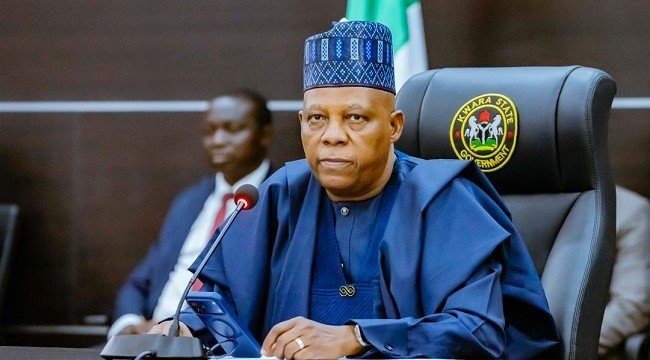
Vice President Kashim Shettima, who received the report during a briefing at the Presidential Villa, Abuja, on Tuesday, said the initiative is designed to bridge the gap between farmers and national planning while transforming agriculture into a major driver of economic growth.

He noted that one of the longstanding challenges in the sector has been the disconnect between farmers and the systems that determine the value of their labour, adding that the Federal Government is committed to changing that narrative.
“Today marks the transition of AGROW from programme design to implementation,” Shettima said, describing the report as “the conclusion of a design process that restores the farmer to the centre of our national economic reasoning, where he has always belonged.”
According to the Vice President, the World Bank-backed programme is rooted in the realities of Nigerian farmers and is designed to attract private sector investments needed to move agriculture from subsistence farming to large-scale commercial production.
The $500 million initiative was developed through seven zonal consultations involving 32 states, reflecting the commitment of state governments to agricultural development and their readiness to take greater responsibility for productivity, infrastructure, extension services and market development.
Nasarawa State Governor, Abdullahi Sule, commended the initiative, saying state governors are fully committed to its successful implementation, while Kaduna State Deputy Governor, Hadiza Balarabe, disclosed that the state allocates over 13 per cent of its annual budget to agriculture and will establish a state-level coordination mechanism for the programme.
Minister of Finance and Coordinating Minister of the Economy, Taiwo Oyedele, described AGROW as a critical component of Nigeria’s economic transformation agenda, noting that it goes beyond food production to encompass macroeconomic stability and job creation.
On his part, Minister of Agriculture and Food Security, Senator Abubakar Kyari, described the programme as a game-changing intervention for Nigeria’s agricultural sector and assured stakeholders of the ministry’s commitment to its successful implementation in line with the Renewed Hope Agenda of the Tinubu administration.
The World Bank’s Programme Leader for AGROW, Ms Bertine Kamphuis, reaffirmed the bank’s commitment to supporting Nigeria, expressing optimism that the initiative would strengthen food security and help lift millions of Nigerians out of poverty.
She emphasised the need for stronger private sector participation across agricultural value chains and called for policies that would create an enabling environment for investment.
Also speaking, Technical Adviser to the Vice President on Agriculture and Executive Secretary of the Presidential Food Systems Coordinating Unit, Ms Marion Moon, revealed that the National Technical Working Group developed an eight-indicator framework to identify priority agricultural value chains using an agroecological approach tailored to Nigeria’s soils, rainfall patterns and growing conditions.
The presentation of the final report marks a major milestone in Nigeria’s efforts to modernise agriculture, improve productivity and unlock sustainable economic opportunities across the country.