
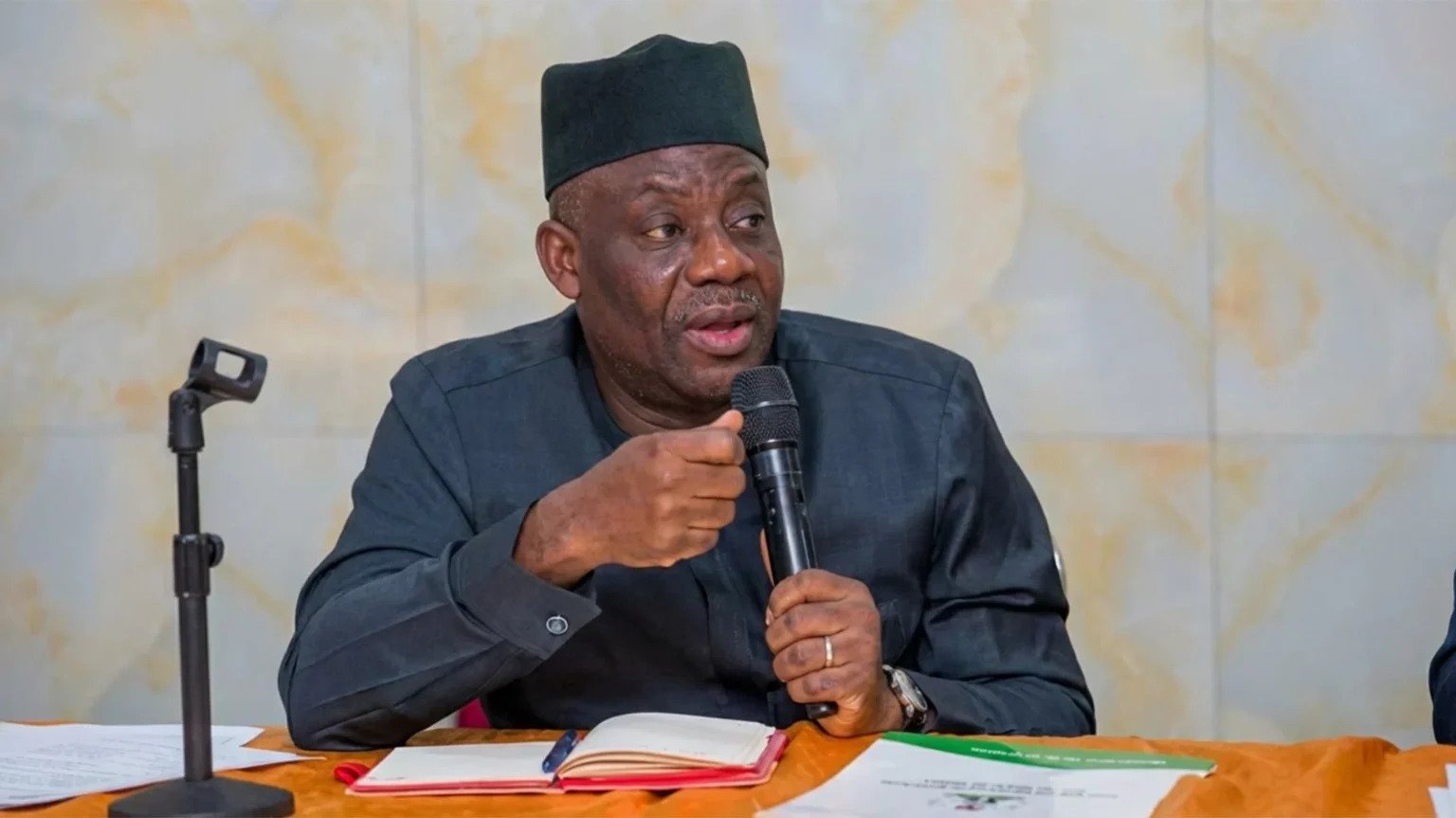
Education Minister Tunji Alausa says government will prioritise domestic institutions and ensure better value for public education spending.
The Federal Government is reviewing its foreign scholarship and bilateral education arrangements to reduce unnecessary expenditure and redirect resources towards strengthening tertiary institutions in Nigeria.
Minister of Education, Dr Tunji Alausa, said the government could no longer justify spending public funds to send students abroad to study programmes already offered by Nigerian universities, polytechnics and colleges of education.

Alausa said the review was necessary to build domestic capacity and ensure that scarce public resources were used more efficiently. He cited a proposal involving about 100,000 Nigerian students travelling to Morocco to study courses such as mass communication and journalism, despite the availability of similar programmes in Nigeria.
According to the minister, the students would also have needed to spend their first year learning French before commencing their programmes, making the arrangement difficult to justify financially.
Alausa said the circumstances that prompted the establishment of many overseas education programmes had changed, noting that Nigeria had significantly expanded its tertiary education capacity over the past two decades.
He stressed that the policy was not a blanket ban on foreign scholarships, as foreign governments willing to sponsor Nigerian students could continue to do so. However, the Federal Government would be more selective about committing Nigerian funds to overseas education.
The minister said existing beneficiaries of bilateral scholarships would continue to receive support until they complete their studies, while new government-funded awards under the reviewed arrangements had been discontinued.
The scholarship review forms part of broader education reforms focused on strengthening Nigerian tertiary institutions, expanding technical and vocational education, promoting research and innovation and improving industry-relevant skills.
Alausa said the government’s priority was to ensure that education spending produces measurable outcomes and contributes directly to Nigeria’s economic and industrial development.