
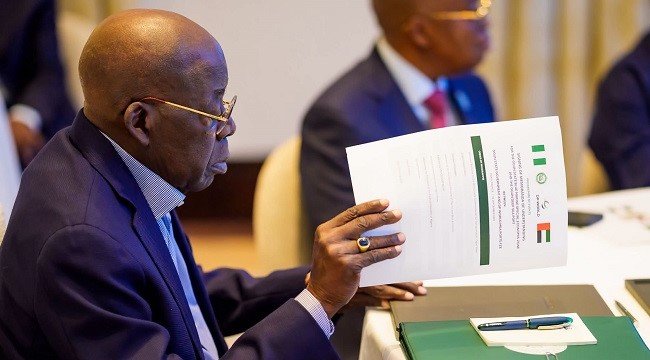
President Bola Tinubu has defended his administration’s plan to secure $20.5 billion and €1.45 billion in foreign loans, saying Nigeria needs long-term investments in infrastructure to achieve its ambition of becoming a $1 trillion economy by 2030.
In a statement titled From Reforms to Delivery: Our Infrastructure Investment and Growth Strategy, President Tinubu said the proposed loans would fund major projects, including the Lagos-Calabar Coastal Highway, Sokoto-Badagry Superhighway, Trans-Sahara Superhighway, electricity grid improvements and upgrades to commercial ports. He argued that the focus should be on the value the borrowed funds would create rather than the amount being borrowed.
The President said the Lagos-Calabar Coastal Highway could reduce transportation costs along its route by 15 to 20 per cent, contribute up to two per cent to GDP and generate about 100,000 direct jobs, alongside more than 150,000 indirect jobs. He added that the projects would improve trade, support industries, connect economic regions and attract private investment.
Tinubu also cited improvements in economic indicators since the introduction of his administration’s reforms in May 2023. He said Nigeria recorded 4.43 per cent economic growth in the second quarter of 2026, while inflation declined to 14.63 per cent in September. He also put the country’s gross external reserves at $55.1 billion as of October 9, 2026.
However, acknowledging the need for fiscal discipline, the President said public debt stood at 35.75 per cent of GDP in the second quarter of 2026, while debt servicing accounted for about 65 per cent of revenue in the first half of the year. He maintained that the government was pursuing longer-term loans to match repayment periods with the lifespan of the projects being financed.
Meanwhile, the Nigeria Labour Congress (NLC) has questioned the justification for further foreign borrowing, despite the government’s claims of increased revenue following the removal of petrol subsidy.
Speaking on Channels Television’s The Morning Brief, NLC President Joe Ajaero asked why the government continued to seek loans from institutions such as the International Monetary Fund and the World Bank when it had reported higher revenue and increased allocations to states. He also argued that rising crude oil prices, which had reportedly exceeded the 2026 budget benchmark of $70 per barrel, should prompt a review of the borrowing plan.
Ajaero clarified that the NLC had no authority to approve or reject government loans, but urged Nigerians and relevant institutions to demand greater accountability over the proposed borrowing. Tinubu, however, maintained that the success of the plan would ultimately depend on completing the projects, ensuring value for money and improving the lives of Nigerians.
Strengthen the loan figures in my headlineAdd the euro loan amount to my headline