
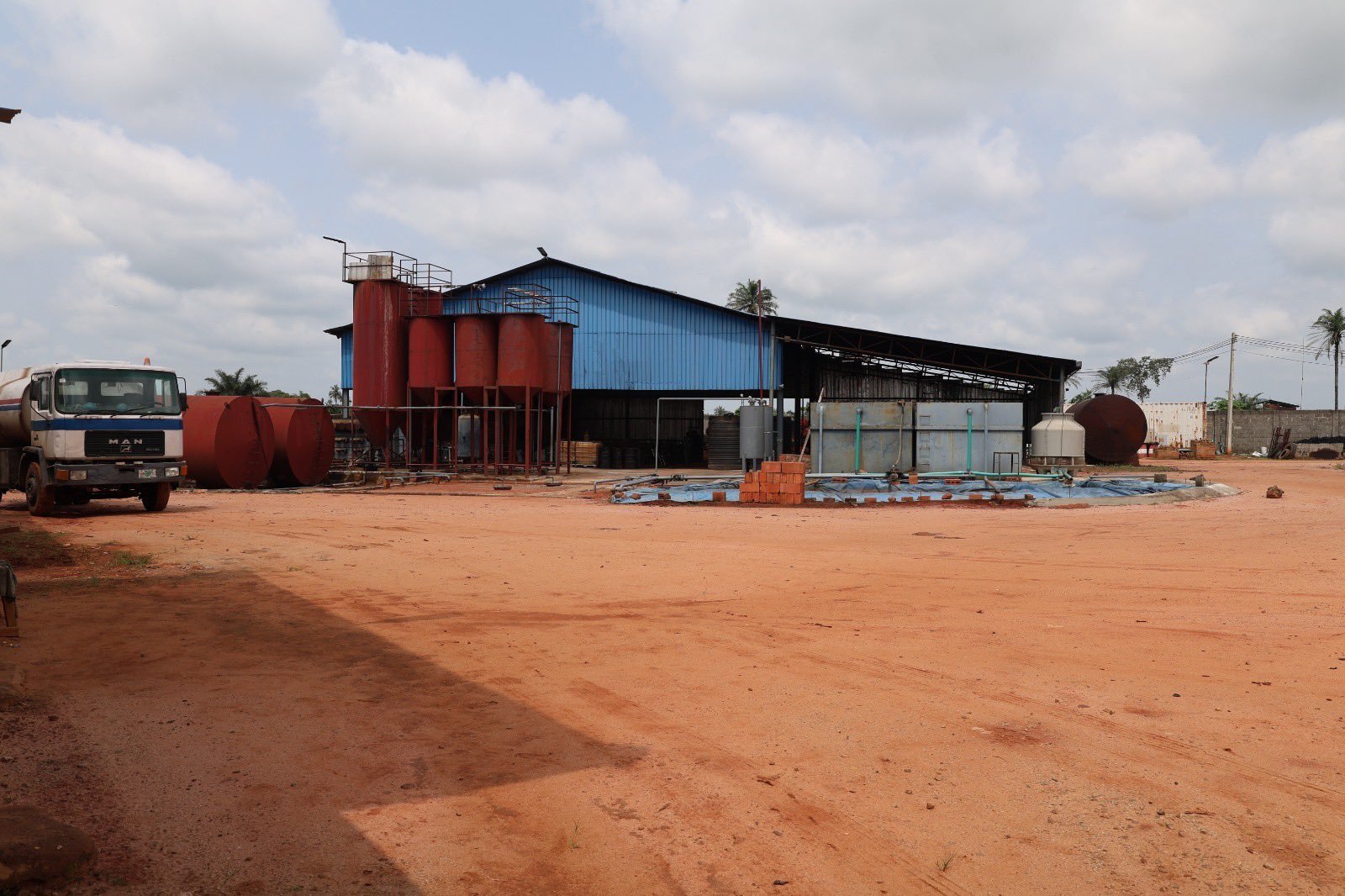
The Economic and Financial Crimes Commission (EFCC) and the Nigerian Midstream and Downstream Petroleum Regulatory Authority (NMDPRA) have sealed a suspected illegal refinery in Ogere-Remo, Ikenne Local Government Area of Ogun State, following a whistleblowing report and intelligence gathering.
The joint inspection uncovered a fenced facility occupying more than three hectares, with underground tanks, heating systems, cooling hydrants and locally fabricated storage tanks allegedly used to process sludge oil and other petroleum waste products into substances suspected to be Automotive Gas Oil (AGO), commonly known as diesel.

Speaking during the operation, the Ogun State Coordinator of NMDPRA, Dr Atilola Akinyemi, described the facility as illegal, saying it had no operating permit from any regulatory authority. He disclosed that its underground storage system had an estimated capacity of over 90,000 litres, adding that laboratory tests would be required to determine the quality and safety of the recovered products.

Akinyemi warned that distributing adulterated petroleum products could pose serious risks to vehicles and engines. He confirmed that the recovered products had been confiscated by the Federal Government and that the facility had been sealed.
The EFCC Zonal Director, Lagos Zonal Directorate 2, Bawa Usman Kaltungo, said the refinery was discovered through whistleblowing and appeared to have been operating for years. He also linked the investigation to concerns about illegal activities in the Ogere axis, recalling that 14 Chinese nationals were arrested a week earlier over alleged illegal lithium processing.
Kaltungo said investigations were ongoing to identify the ultimate owners of the refinery, whom he described as being based in China, and vowed that those responsible would be brought to Nigeria to answer for their activities.
Also speaking, the EFCC Director of Proceeds of Crime Management, Gbolahan Latona, urged Nigerians to support efforts to tackle economic crimes, warning that illegal operations undermine legitimate investments and harm the country’s economy.
Latona added that suspects would be prosecuted after investigations and the gathering of sufficient evidence, while proceeds of crime would be forfeited to the government if convictions were secured.