
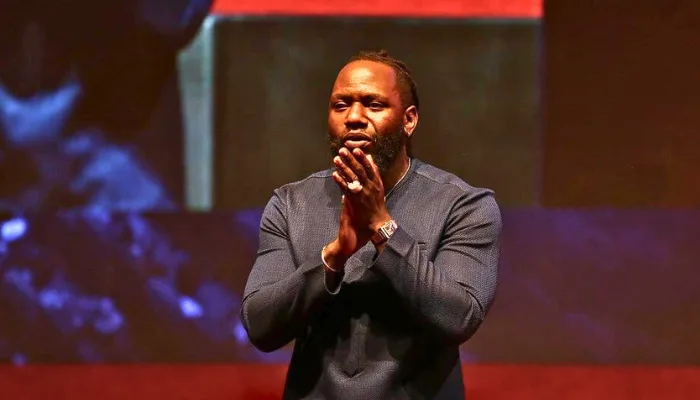
The pastor is challenging his purported removal as Chairman of the Board of Trustees, questioning the validity of meetings and resolutions allegedly adopted by some trustees.
The Senior Pastor of the Fountain of Life Church, Pastor Jimmy Odukoya, has approached the Federal High Court in Lagos to challenge his purported removal from office and decisions allegedly taken by some members of the church’s Board of Trustees.
Odukoya and the Incorporated Trustees of the Fountain of Life Church instituted the suit against eight defendants, including Pastor Tolu Odukoya, Biodun Balogun, Biodun Awosika, Pastor Rotimi Okpaise, Pastor Tobi Enuha, Pastor Gbenga Onabanjo, Pastor Fred Ohiani and Pastor Akin Osinbajo.
The court processes, dated November 20, 2026, include an originating summons, a motion on notice and affidavits sworn to by Odukoya in support of the applications.
In the originating summons, the plaintiffs are asking the court to determine whether meetings held by some members of the Board of Trustees on January 22, February 28 and November 16, 2026, and the decisions reached at those meetings, complied with the church’s constitution.
In his affidavit, Odukoya said he was appointed Senior Pastor and Chairman of the Board of Trustees at an emergency board meeting on September 14, 2023, and was installed later that month.
He stated that the church and its organs were governed by a constitution amended through a special resolution dated January 16, 2003, and that the defendants were members of the Board of Trustees.
According to him, the disagreement began after a December 19, 2025, board meeting attended by Bishop Mike Okonkwo, where members discussed the possibility of handing over the church’s administrative arm to the Associate Senior Pastor. He maintained that no resolution or final decision was reached at the meeting.
Odukoya said he subsequently convened a board meeting for January 5, 2026, but it could not hold because there was no quorum. He added that some trustees later presented proposals to him, many of which he rejected on the grounds that they were inconsistent with the church’s constitution.
He further stated that the trustees sent him a letter dated January 7, requesting a response within three days, but he did not see it until after the deadline had passed.
Odukoya said he later directed the board secretary to schedule a meeting for January 30, 2026, following a request by a board member for a special meeting. However, he alleged that the fourth defendant separately circulated a notice for a meeting scheduled for January 22, which did not originate from the board secretariat.
“I received the notice late in the evening of January 20, 2026, effectively giving me one day notice of the purported meeting,” he stated.
He said he declined to attend, but the defendants proceeded with the gathering under the name of “concerned members of the Board”.
According to Odukoya, the participants purportedly adopted resolutions separating the offices of Senior Pastor and Chairman of the Board of Trustees, suspending the board secretary and a church pastor, dissolving the church’s Executive Council and amending its constitution.
He said subsequent conciliatory meetings failed to resolve the disagreement. Following another meeting on February 9, he said he met with Bishop Okonkwo and, based on an understanding reached, wrote to the concerned trustees on February 13.
The trustees reportedly replied on February 15, while Odukoya sent a further response on February 20.
However, he alleged that another gathering held on February 28 was neither a board meeting nor a meeting of the church council.
“Nonetheless, a vote was taken among those present, and I was purportedly removed as the Chairman of the Board,” he stated.
Odukoya said he challenged the decision in a letter dated March 2, 2026, addressed to the concerned trustees.
He also alleged that the defendants caused a person describing herself as an interim secretary to issue notices for board meetings, despite what he described as the failure to validly remove the substantive secretary in accordance with the church’s constitution.
The suit seeks judicial determination of the validity of the disputed meetings and decisions.