
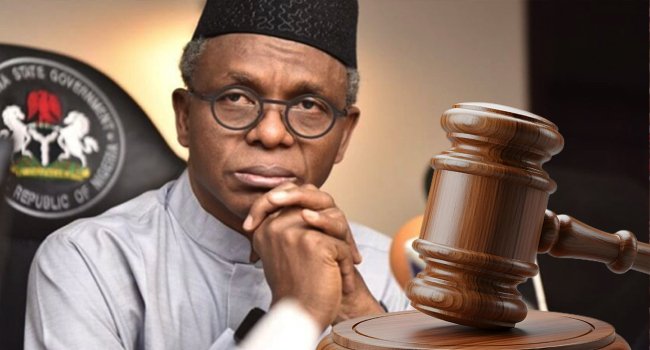
The former Kaduna governor tells the Federal High Court that he neither owned phone-tapping equipment nor had the technical knowledge to intercept telephone conversations.
Former Kaduna State Governor, Nasir El-Rufai, has denied intercepting the telephone conversations of National Security Adviser (NSA), Nuhu Ribadu, insisting that his earlier remarks on the matter were political rhetoric rather than an admission of wrongdoing.
El-Rufai made the clarification while testifying in his ongoing phone-tapping case before the Federal High Court in Abuja.

Led in evidence by his counsel, Paul Erokoro, a Senior Advocate of Nigeria (SAN), the former governor told the court that he had never owned equipment capable of intercepting telephone calls and lacked the technical knowledge required to carry out such an operation.
He also denied having access to Ribadu’s communication networks or devices, maintaining that he neither intercepted the NSA’s calls nor instructed anyone to do so.
Explaining his controversial remarks during an interview with Arise Television in February, El-Rufai said his use of the word “we” referred to opposition politicians rather than an admission that he personally participated in phone tapping.
He described the statement as an exaggerated political response intended to communicate the frustration of opposition figures over their treatment by the government.
El-Rufai told the court that his comments were meant to provoke a political response rather than disclose any security operation involving Ribadu’s telephone conversations.
The case followed an interview the former governor granted Arise Television’s Prime Time programme on February 13, 2026, a day after security operatives attempted to arrest him at the Nnamdi Azikiwe International Airport in Abuja.
El-Rufai had returned from Cairo, Egypt, when the operatives reportedly attempted to arrest him but eventually seized his international passport without taking him into custody.
During the interview, he accused Ribadu of ordering the attempted arrest, claiming he became aware of the directive after listening to a telephone conversation in which the NSA allegedly instructed security operatives to arrest him.
His subsequent explanation before the court forms part of his defence against the phone-tapping allegations.