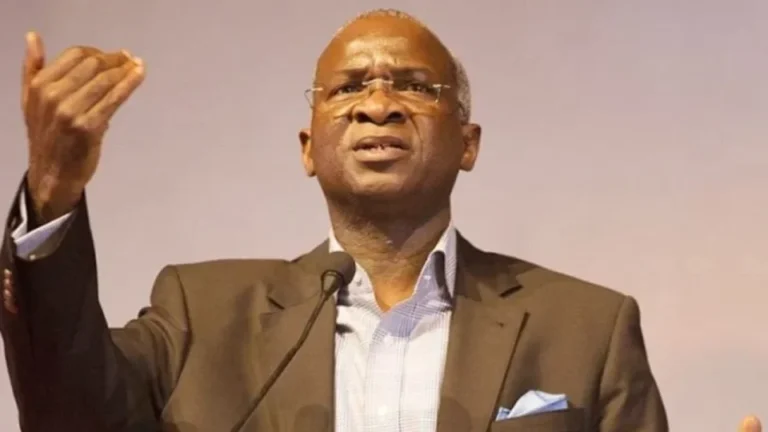
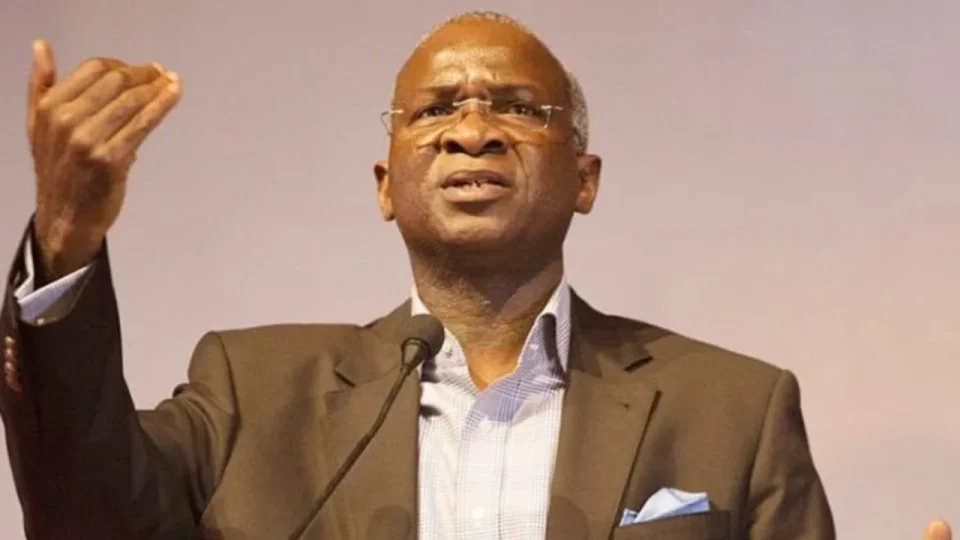
…The former Lagos governor says electoral offences should attract stricter prison sentences rather than extrajudicial killings.
Former Lagos State Governor Babatunde Fashola has rejected calls for election riggers to be killed, insisting that electoral offences must be punished within the provisions of the law.
Fashola, a Senior Advocate of Nigeria (SAN) and former Minister of Power, Works and Housing, made the position known during an interview with ARISE News anchor, Ojy Okpe, ahead of the 2027 general elections.
He was responding to the “rig and die” slogan attributed to former Deputy Senate President Ovie Omo-Agege and comparisons with former President Muhammadu Buhari’s controversial remarks about ballot-box snatchers ahead of the 2019 elections.
Asked whether election riggers should face the death penalty, Fashola replied, “Absolutely not. I mean, come on.”
He argued that Nigeria must move away from extreme political rhetoric, stressing that the Electoral Act does not prescribe death as punishment for electoral offences.
According to him, even offences punishable by death require due process, including a formal charge, trial and an opportunity for the accused to defend themselves.
Fashola maintained that electoral manipulation should be condemned but warned against turning elections into an excuse for violence.
“The penalty for rigging is not death. But don’t rig. Go and campaign for your party,” he said.
The former governor urged political parties to concentrate on mobilising voters and strengthening their support bases rather than attempting to manipulate election results.
While acknowledging the need for stronger deterrents, Fashola proposed stiffer custodial sentences without the option of fines for serious electoral offences capable of undermining democracy.
He argued that such offences should not be treated as crimes that perpetrators could simply pay their way out of.
Fashola also called for sustained public education on electoral conduct and democratic principles, suggesting that civic enlightenment should begin at the primary school level and be delivered in Nigeria’s major languages.
He said greater understanding of democracy would help reduce desperation around elections by reminding politicians and voters that parties could win or lose across different election cycles.