Fresh levies of up to 12.5% target major trading partners, sparking global criticism and raising fears of prolonged trade tensions.
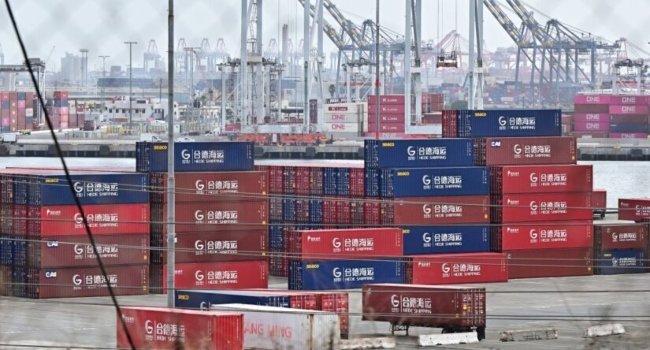
Nigeria is among 60 trading partners affected by a new wave of United States tariffs that took effect on Friday under President Donald Trump’s trade policy, replacing an expiring global duty introduced earlier this year.
The new levies, ranging from 10 per cent to 12.5 per cent, affect major economies including China, India, Japan, South Korea and members of the European Union, prompting criticism from several countries.

US Trade Representative Jamieson Greer said the measures followed months of investigations and are intended to encourage trading partners to adopt forced labour import prohibitions similar to those enforced by the United States.
Economies that have implemented or committed to implementing such measures, including Canada, the European Union, India and the United Kingdom, were subjected to the lower 10 per cent tariff rate. China, Japan, South Korea and dozens of other countries face the higher 12.5 per cent rate.
The Trump administration introduced the new duties after the US Supreme Court struck down a number of earlier tariffs in February. The latest measures are considered more legally robust and are expected to remain in place for the duration of Trump’s presidency.
While some countries secured relief through existing trade agreements with Washington, several governments condemned the tariffs. Japan described the duties as regrettable, Australia called them unjustified, and China warned that trade wars are not in the interest of any nation.
The European Union welcomed the announcement, saying the tariffs align with commitments reached under the EU-US Joint Statement.
Goods already covered by sector-specific tariffs, including steel and aluminium, are exempt from the latest measures. Certain energy products, fertilisers and goods covered by the US-Mexico-Canada trade agreement will also not be affected.
The US is also conducting investigations into 16 economies over allegations of excess industrial capacity, a move that could result in additional tariffs in the coming months.
Trade experts say the measures strengthen Washington’s negotiating position while signalling a more protectionist stance from the world’s largest economy. They warn, however, that recent trade agreements remain fragile and could be subject to further changes as the administration continues to expand its tariff policy.
| S/N | Economy / Country | Section 301 Tariff Rate | Category / Mechanism |
|---|---|---|---|
| 1 | Argentina | 10% | Forced Labor Ban / ART Commitment |
| 2 | Bangladesh | 10% | Forced Labor Ban / ART Commitment |
| 3 | Cambodia | 10% | Forced Labor Ban / ART Commitment |
| 4 | Canada | 10% | Enforcement Framework / ART |
| 5 | Ecuador | 10% | Enforcement Framework / ART |
| 6 | El Salvador | 10% | Forced Labor Ban / ART Commitment |
| 7 | Guatemala | 10% | Forced Labor Ban / ART Commitment |
| 8 | Honduras | 10% | Forced Labor Ban / ART Commitment |
| 9 | India | 10% | Forced Labor Ban / ART Commitment |
| 10 | Indonesia | 10% | Enforcement Framework / ART |
| 11 | Jordan | 10% | Forced Labor Ban / ART Commitment |
| 12 | Malaysia | 10% | Forced Labor Ban / ART Commitment |
| 13 | Mexico | 10% | Enforcement Framework / ART |
| 14 | Pakistan | 10% | Enforcement Framework / ART |
| 15 | Sri Lanka | 10% | Forced Labor Ban / ART Commitment |
| 16 | Trinidad and Tobago | 10% | Forced Labor Ban / ART Commitment |
| 17 | United Kingdom | 10% | Forced Labor Ban / ART Commitment |
| 18 | European Union | 10% (Net of MFN) | Total duty capped at 10% (0% if MFN ≥ 10%) |
| 19 | Taiwan | 10% (Net of MFN) | Total duty capped at 10% (0% if MFN ≥ 10%) |
| 20 | Japan | 12.5% (Net of MFN) | Total duty capped at 12.5% (0% if MFN ≥ 12.5%) |
| 21 | South Korea | 12.5% (Net of MFN) | Total duty capped at 12.5% (0% if MFN ≥ 12.5%) |
| 22 | Switzerland | 12.5% (Net of MFN) | Total duty capped at 12.5% (0% if MFN ≥ 12.5%) |
| 23 | Algeria | 12.5% | Standard Rate |
| 24 | Angola | 12.5% | Standard Rate |
| 25 | Australia | 12.5% | Standard Rate |
| 26 | The Bahamas | 12.5% | Standard Rate |
| 27 | Bahrain | 12.5% | Standard Rate |
| 28 | Brazil | 12.5% | Standard Rate |
| 29 | Chile | 12.5% | Standard Rate |
| 30 | China (People’s Republic of) | 12.5% | Standard Rate |
| 31 | Colombia | 12.5% | Standard Rate |
| 32 | Costa Rica | 12.5% | Standard Rate |
| 33 | Dominican Republic | 12.5% | Standard Rate |
| 34 | Egypt | 12.5% | Standard Rate |
| 35 | Guyana | 12.5% | Standard Rate |
| 36 | Hong Kong, China | 12.5% | Standard Rate |
| 37 | Iraq | 12.5% | Standard Rate |
| 38 | Israel | 12.5% | Standard Rate |
| 39 | Kazakhstan | 12.5% | Standard Rate |
| 40 | Kuwait | 12.5% | Standard Rate |
| 41 | Libya | 12.5% | Standard Rate |
| 42 | Morocco | 12.5% | Standard Rate |
| 43 | New Zealand | 12.5% | Standard Rate |
| 44 | Nicaragua | 12.5% | Standard Rate |
| 45 | Nigeria | 12.5% | Standard Rate |
| 46 | Norway | 12.5% | Standard Rate |
| 47 | Oman | 12.5% | Standard Rate |
| 48 | Peru | 12.5% | Standard Rate |
| 49 | Philippines | 12.5% | Standard Rate |
| 50 | Qatar | 12.5% | Standard Rate |
| 51 | Russia | 12.5% | Standard Rate |
| 52 | Saudi Arabia | 12.5% | Standard Rate |
| 53 | Singapore | 12.5% | Standard Rate |
| 54 | South Africa | 12.5% | Standard Rate |
| 55 | Thailand | 12.5% | Standard Rate |
| 56 | Türkiye | 12.5% | Standard Rate |
| 57 | United Arab Emirates | 12.5% | Standard Rate |
| 58 | Uruguay | 12.5% | Standard Rate |
| 59 | Venezuela | 12.5% | Standard Rate |
| 60 | Vietnam | 12.5% | Standard Rate |