
Operators Cite Fuel Queues, Conversion Costs and Limited Refuelling Stations as Major Challenges
States across Nigeria are adopting different approaches to the Federal Government’s Compressed Natural Gas initiative as the October 1 deadline for measurable reductions in transport costs approaches.
While some states have introduced subsidised CNG or alternative-energy transport services, commercial operators in several others are raising concerns over inadequate refuelling stations, high vehicle conversion costs and long queues.

President Bola Tinubu had, after meeting the 36 state governors on August 27, directed states to accelerate implementation of the National Affordable CNG Transit Programme and ensure that lower energy costs translate into cheaper fares for commuters.
The Presidency said more than 120,000 vehicles had been converted, with over 400 certified conversion centres and more than 90 CNG refuelling stations nationwide.
However, transport operators say the infrastructure remains inadequate in several areas.
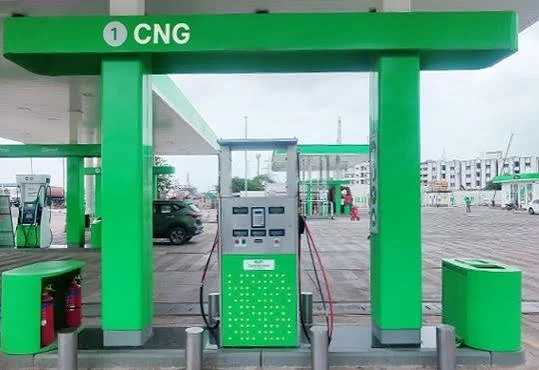
In Lagos, motorists using CNG have reported long queues at stations, including the NIPCO facility at Ibafo along the Lagos-Ibadan Expressway. Commercial drivers said limited stations were forcing them to spend hours waiting to refuel.
Some operators also cited conversion costs of between N800,000 and N1m, depending on the vehicle and cylinder capacity, as a barrier to adoption.
The National Association of Road Transport Owners said the queues were costing operators valuable time and money but expressed confidence that additional stations would gradually ease the situation.
The situation varies across states. In Kaduna, the government has operated 100 CNG buses on eight routes since July 2025, providing free services to students, civil servants, traders, artisans and other residents.
Plateau State, meanwhile, operates subsidised buses charging N200 for journeys of about 18km to 20km within Jos. However, transport operators in the state said CNG infrastructure remained insufficient, with some supplied buses reportedly unable to operate because of a lack of refuelling facilities.
In Gombe, operators said CNG was suitable for some urban journeys but remained difficult for long-distance travel because of limited refuelling infrastructure. They also cited conversion costs of about N750,000 to N800,000 as a major obstacle.
Jigawa and Zamfara operators similarly complained about inadequate CNG stations, while Kwara transport officials said only about 100 commercial vehicles had been converted, partly because of concerns over cost and vehicle performance.
Other states are pursuing different solutions. Borno has deployed electric vehicles alongside CNG transport, while Nasarawa is planning conversion centres across its three senatorial districts. Benue is conducting an awareness campaign ahead of wider conversion, and Edo plans to deploy more than 50 CNG buses in October.
Kano is also preparing CNG-powered buses for urban and interstate transport and has procured 500 electric tricycles, while Rivers State plans to return subsidised buses to the roads from October.
The Federal Government has continued to invest in CNG infrastructure and introduced financing arrangements to help vehicle owners spread the cost of conversion.
The Presidency has cited fare reductions already recorded in some states, including a reported reduction in the Lagos-Ibadan route in Oyo from about N8,000 to N3,200, while Borno, Adamawa and Enugu have also recorded lower fares on selected routes.
However, operators say cheaper fuel alone may not immediately translate into lower fares, with conversion costs, refuelling access, maintenance, spare parts, financing and other operating expenses also affecting transport costs.
With October 1 approaching, states are under pressure to expand infrastructure and convert more vehicles if the Federal Government’s target of reducing transport costs is to reach a wider number of commuters.