
Major General Dangana Says Emerging Threats Require Flexible Planning and Coordinated Responses
The General Officer Commanding 3 Division of the Nigerian Army and Commander, Operation Enduring Peace, Major General Maxwell Dangana, has urged operational-level commanders to strengthen their capacity to respond to emerging security threats through effective planning and multi-agency cooperation.
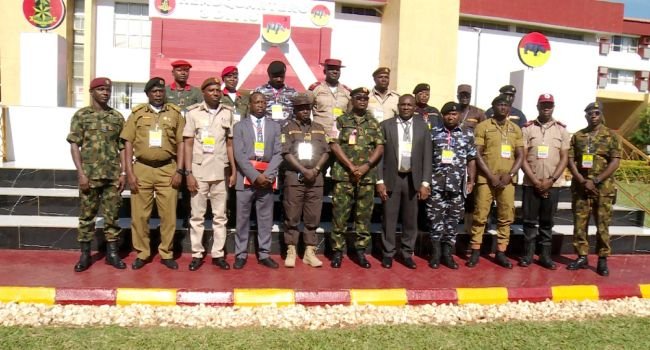
Dangana spoke while declaring open a five-day 3 Division Operations Planning Cadre at the 3 Division Auditorium, Maxwell Khobe Cantonment, Jos.

The training, themed “Building the Capacity of Operational Level Commanders to Meet Contemporary Security Challenges in a Joint and Multi-Agency Environment,” brings together commanders and representatives from formations under 3 Division, as well as personnel from sister security and intelligence agencies.
Dangana said the contemporary security environment was increasingly complex and unpredictable, requiring commanders to be operationally competent, adaptable and innovative.
He identified terrorism, insurgency, banditry, communal violence and violent extremism among the threats facing national security, noting that their interconnected nature requires timely assessment, flexible planning and coordinated responses.
The GOC also highlighted the impact of technology, information management and social media on military operations, alongside the activities of state and non-state actors.
He said effective leadership and close cooperation among security agencies were essential to protecting communities, lives and property while supporting civil authorities.
Earlier, Commander 3 Division Garrison, Brigadier General Adiyu Aminu, described the training as an important platform for improving the knowledge, skills and professional competence of operational-level commanders.
Aminu said participants would share experiences, examine lessons learnt and identify practical solutions to challenges encountered within the 3 Division Area of Responsibility.
He stressed that joint operations should extend beyond occasional collaboration to include intelligence sharing, logistics, communication, operational execution and post-operation assessment.
The five-day programme is expected to strengthen joint planning, operational coordination and inter-agency collaboration among the participating security and intelligence agencies.