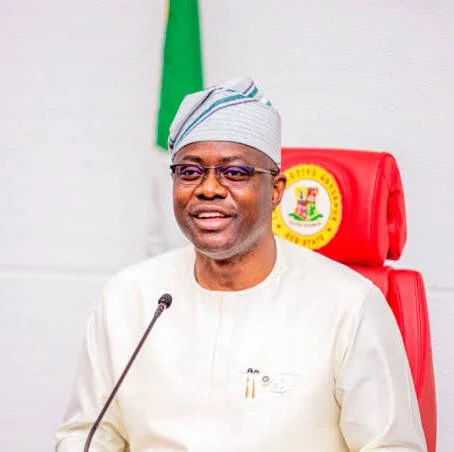
Oyo State Governor Seyi Makinde has criticised the delay in releasing Nigeria LNG (NLNG) dividend funds expected by states, saying the development could disrupt infrastructure projects and long-term economic planning.
Governor Makinde spoke on Saturday at the 2027 Budget Stakeholders’ Consultative Engagement held at Olola Ogunlana Hall, International Conference Centre, University of Ibadan.
He said each state was expected to receive ₦250 billion from the dividends but claimed the funds would not be released until after the 2027 elections.
“Each state was supposed to get ₦250 billion. We had already identified projects that would expand Oyo State’s economy. But they have now said the money will not be paid until after the election. Is the election more important than the people of Nigeria?” he asked.
The governor said the delay could worsen financial pressures on states, disclosing that Oyo’s monthly wage bill had risen from ₦4.5 billion in 2019 to ₦18 billion in 2026. He added that inflation had significantly increased the cost of major infrastructure projects.
Governor Makinde said infrastructure investment remained central to his administration’s economic strategy, noting that the next phase of development would require prudent financial management and the preservation of institutional reforms.
He also disclosed that his administration planned to implement about 30 per cent of the 2027 budget, as a new government would take over on May 29, 2027. He thanked residents for their support, adding that budgeted projects had recorded an implementation chance of about 70 per cent over the past seven years.
On agriculture, Governor Makinde defended the state’s tractorisation policy, saying the decision to scrap the loss-making government tractor unit and privatise tractor services had improved farmers’ access to mechanisation.
The Speaker of the Oyo State House of Assembly, Adebo Ogundoyin, commended the governor for involving residents in budget planning, saying public consultation had helped improve project execution.
The Secretary to the State Government, Musibau Babatunde, said the administration had shifted from ad hoc budgeting to a performance-driven system, recording more than 70 per cent budget performance in 2026.
He added that ministries, departments and agencies must demonstrate how they incorporated public feedback before defending their budgets at the pre-treasury stage.
Earlier, the Commissioner for Budget and Economic Planning, Ayobami Ojo, said the 2027 budget would focus on realistic revenue projections, prudent spending and effective resource allocation.
Participants, including farmers, student unions, persons with disabilities, civil society groups, artisans and market associations, made recommendations on roads, security, welfare and project maintenance. The engagement was attended by Deputy Governor Bayo Lawal and other government officials, traditional rulers, labour leaders and youth groups.