
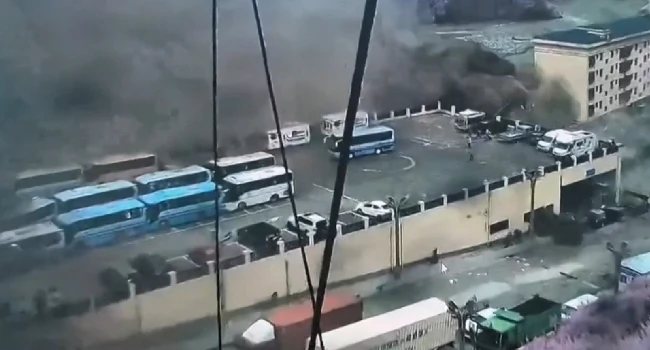
Massive floods sweep northern Nepal near China border, leaving dozens dead, disrupting power supply and triggering major search-and-rescue operations.
At least 95 people have been killed and 384 tourists reported missing after massive floods swept through Nepal’s northern Rasuwa district near the Chinese border, authorities said on Wednesday.
The Nepal Tourism Board said the missing persons include 291 foreign nationals and 93 Nepali citizens, with Americans, Indians, Australians, Malaysians and Britons among those yet to be accounted for.

The disaster struck the Syabrubesi area, a gateway to the popular Langtang trekking region and a route used by pilgrims travelling towards Mount Kailash and Lake Mansarovar. Nepal Police spokesman Abi Narayan Kafle said 28 police personnel were also missing.
Floodwaters carrying mud, rocks and debris swept through mountain valleys, destroying buildings and damaging roads and other infrastructure. Authorities warned residents living near rivers to relocate as rescue teams were deployed to affected communities.
The Nepal Army has deployed helicopters and disaster-response personnel to support search and rescue operations, while Prime Minister Balendra Shah convened an emergency meeting to coordinate the response.
The flooding has also severely affected Nepal’s power infrastructure, with about 430 megawatts of generation capacity, including hydropower and solar facilities, reportedly disrupted. Several highways were also closed, hampering rescue and relief efforts.
The disaster extended towards the Nepal-China border, where Chinese authorities also reported casualties following a mudslide at Gyirong Port on the Tibetan side.
Chinese President Xi Jinping ordered an all-out rescue operation, directing authorities to search for missing people, treat the injured and minimise casualties.
Preliminary assessments suggested that a rock-and-ice avalanche may have blocked the Lhende River and triggered the flooding, while authorities warned of the possibility of another flood caused by an upstream blockage.
The European Union has activated its Copernicus satellite surveillance system to help map affected areas and support emergency response efforts.
Rescue teams continued searching for missing people as authorities worked to determine the full extent of the destruction amid ongoing monsoon rains and heightened concerns over further flooding.