
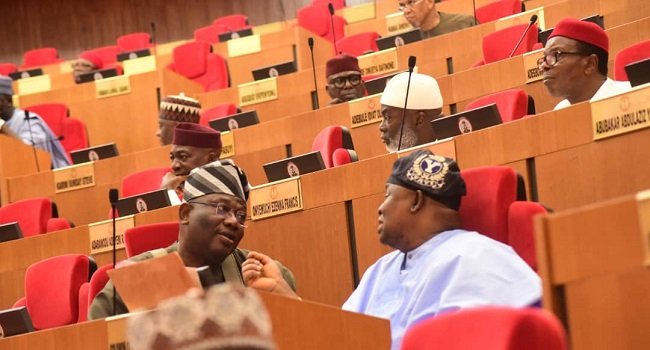
Lawmakers seek greater transparency and accountability as donor-funded projects will now be aligned with Nigeria’s national development priorities and budget framework
The Senate has adopted key resolutions to strengthen the regulation, coordination and transparency of foreign aid in Nigeria, approving the establishment of a mandatory registration system and a national database for all foreign aid, grants and donations received in the country.
The upper chamber also resolved that all donor-funded projects must be integrated into the national budget framework and aligned with Nigeria’s development priorities to improve accountability, coordination and value for money.

The resolutions followed the lead debate on the Bill for an Act to Provide for the Regulation, Coordination, Transparency and Disclosure of Foreign Aid, Grants and Donations in the Federal Republic of Nigeria, 2026, sponsored by Senator Ibrahim Dankwambo (Gombe North).
Leading the debate, Dankwambo noted that Nigeria remains one of the largest recipients of foreign assistance in Africa, receiving grants, technical support, humanitarian interventions and concessional financing from bilateral and multilateral partners.
He, however, lamented that the country’s foreign aid system remains fragmented and poorly coordinated, with several donor-funded projects implemented outside the national budget framework and, in some cases, duplicated or misaligned with national development priorities.
According to him, the proposed legislation seeks to address these challenges by mandating the registration of all foreign aid in a national database and ensuring donor-funded projects are incorporated into national planning and budgeting processes.
The bill also provides for the public disclosure of funding agreements, disbursement schedules, project outcomes and audit reports, while prescribing sanctions for non-registration, diversion or misuse of funds, false disclosures and the implementation of unapproved projects.
Speaking on the bill, Senate President Godswill Akpabio said stronger oversight of foreign aid had become necessary to guarantee transparency and accountability in the management of donor funds and the activities of organisations receiving external assistance.
Akpabio argued that the persistence of insurgency in parts of the country, particularly the prolonged activities of Boko Haram, underscores the need for greater scrutiny of foreign aid flows and non-governmental organisations operating within Nigeria.
“If there was no oxygen, Boko Haram would not be existing,” he stated.
He stressed that foreign aid and the operations of some non-governmental organisations must be closely monitored to ensure they serve their intended developmental and humanitarian purposes.
If passed into law, the legislation is expected to significantly reform Nigeria’s foreign aid management system by promoting transparency, eliminating duplication of projects and ensuring that donor interventions directly support the country’s development agenda.