
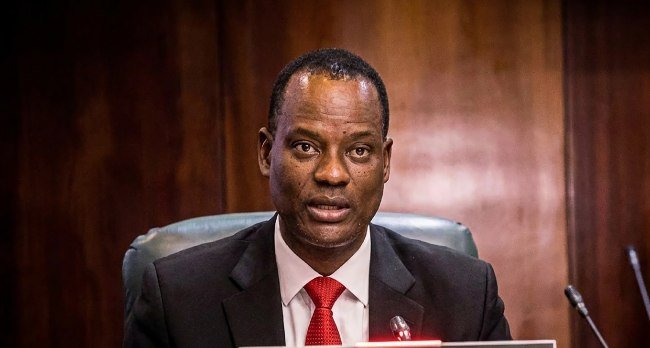
Finance minister says facility was approved by National Assembly and will help refinance more expensive debt.
The Minister of Finance and Coordinating Minister of the Economy, Taiwo Oyedele, has defended the Federal Government’s $5 billion financing facility with First Abu Dhabi Bank, rejecting calls for detailed disclosure of how the funds will be spent.
Oyedele spoke on Wednesday during a media briefing in Abuja, saying the transaction had received unnecessary scrutiny despite being approved by the National Assembly and structured primarily to refinance more expensive government debt.

The Federal Government recently drew about $1.5 billion, representing the first tranche of the facility, which was approved by the National Assembly on March 31, 2026. The funds are expected to support the 2026 budget, infrastructure projects and debt refinancing.
Oyedele said the government would account for its spending through established public financial reporting processes, but questioned why the First Abu Dhabi Bank facility was being singled out for special disclosure.
He dismissed suggestions that the transaction was conducted without due process, stressing that it was considered by the Federal Executive Council and subsequently presented to the National Assembly for approval.
The minister explained that the government was drawing the facility in phases to avoid paying unnecessary costs on funds that had not yet been deployed.
According to him, the facility also differs from Nigeria’s traditional fixed-rate borrowing because its interest rate is flexible, allowing the government to benefit if global rates decline.
Oyedele said the all-in cost of the facility was lower than Nigeria’s existing debt portfolio and that its primary objective was to refinance more expensive obligations and reduce borrowing costs.
The financing arrangement requires Nigeria to pledge securities worth about 133 per cent of the amount drawn as collateral.
The International Monetary Fund and Fitch Ratings have previously raised concerns about the structure, particularly its transparency and potential implications for Nigeria’s sovereign debt risks.
Oyedele, however, said the Ministry of Finance and the Debt Management Office would publish frequently asked questions on the transaction to address concerns and provide further clarification.
He maintained that there was nothing unusual about the facility, describing it as another financing instrument available to the government.