
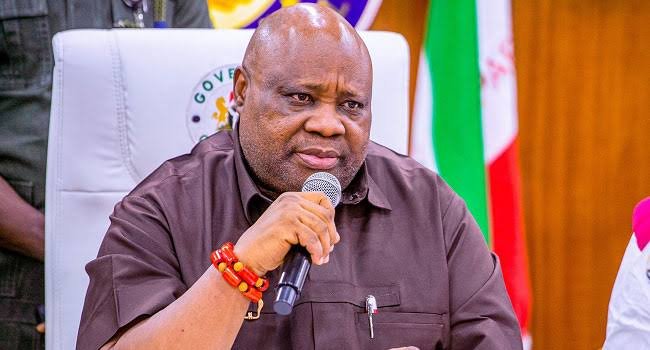
State says account freeze was aimed at blocking workers’ palliative payments, vows to challenge allegations.
The Osun State Government has rejected the Economic and Financial Crimes Commission’s (EFCC) allegation that ₦11 billion was looted from its accounts, describing the claim as false and an attempt to justify what it called the unlawful freezing of the state’s bank account.
In a statement issued on Wednesday by the Commissioner for Information and Public Enlightenment, Oluomo Kolapo Alimi, the government alleged that the account was frozen on the directive of former governor and Minister of Marine and Blue Economy, Gboyega Oyetola, to frustrate the payment of palliatives promised to workers ahead of the August 15 governorship election.

The state government said it had already paid the palliatives after negotiations with organised labour to cushion the impact of the current economic situation, insisting that the payments were part of its workers’ welfare programme and not the first of such interventions.
It accused the EFCC of carrying out a politically motivated operation in collaboration with the All Progressives Congress (APC), alleging that the commission was attempting to damage the image of Governor Ademola Adeleke’s administration through what it described as baseless accusations.
The government maintained that public funds had been judiciously utilised for infrastructure development, workers’ welfare and other developmental projects, insisting there were no funds available for looting as alleged by the anti-graft agency.
It further claimed that despite investigating top government officials since March 2026, including repeated interrogations, the EFCC had failed to establish any evidence of wrongdoing.
According to the statement, even if the commission had evidence of financial misconduct, due process required the prosecution of suspects through established legal procedures rather than freezing the state’s accounts without a court order.
The Osun Government described the EFCC’s explanation as an afterthought intended to justify an action that had attracted widespread criticism, insisting the allegations would not stand the test of law or public scrutiny.
The response followed the EFCC’s statement that the state’s account was frozen to prevent the alleged diversion of public funds under investigation and not because of the forthcoming governorship election.