
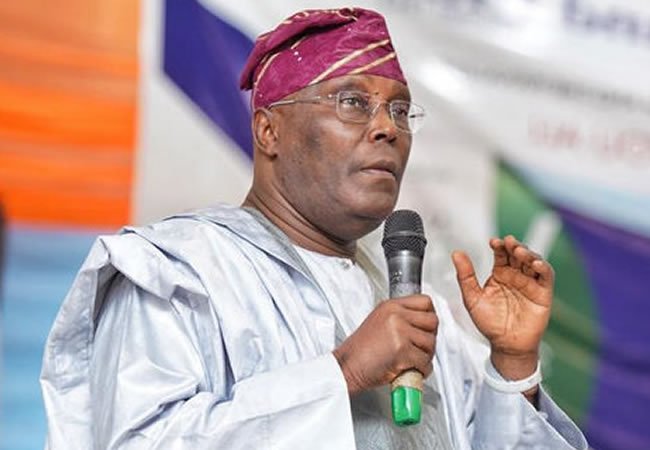
Former vice president’s media aides issue conflicting statements on whether he plans to restore or retain fuel subsidy ahead of the 2027 election.
The presidential candidate of the African Democratic Congress (ADC), Atiku Abubakar, has sparked confusion over his position on fuel subsidy after two of his media aides issued conflicting statements on the policy.
While one aide said Atiku would restore petrol subsidy if elected president in 2027 before phasing it out, another insisted the former vice president has no plans to return to the old subsidy regime.
The contradiction comes days after Atiku criticised the removal of fuel subsidy and proposed a temporary, targeted intervention to ease the burden on Nigerians.
Speaking on a television programme, Atiku’s spokesman, Paul Ibe, said the former vice president would introduce a temporary subsidy tied to domestic refining and local crude oil supply. He explained that crude oil would be sold to local refiners at discounted rates to reduce production costs and lower fuel prices.
According to Ibe, the intervention would only last for a limited period to stimulate economic growth before being gradually phased out.
However, another media aide, Phrank Shaibu, dismissed that interpretation, describing it as inaccurate and misleading.
Shaibu said Atiku’s proposal is not a return to the previous import-based subsidy system but a targeted, transparently funded and independently audited intervention designed to support domestic refining and increase fuel supply.
He explained that the proposed support would end only after specific conditions, including improved local refining capacity, stronger competition and stable fuel supply, have been achieved.
The conflicting statements have intensified debate over Atiku’s economic agenda, especially as he had previously supported fuel subsidy removal during the 2019 and 2023 presidential elections before recently calling for its reversal.
The controversy comes as fuel subsidy remains one of the biggest issues ahead of the 2027 presidential election, with different political leaders offering contrasting approaches to managing Nigeria’s petroleum sector.