
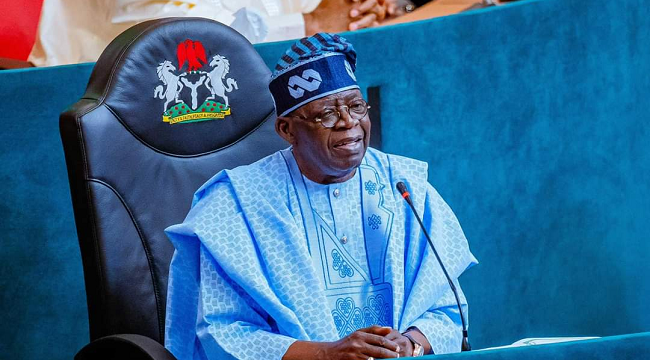
The Federal Government says the economic reforms of President Bola Tinubu’s administration have achieved a “reasonable degree of stability and growth” despite the country’s high inflation rate.
The Minister of State for Foreign Affairs, Sola Enikanolaiye, stated this on Saturday while speaking with journalists at a sensitisation workshop on the ECOWAS Trade Liberalisation Scheme held in Bauchi.

Enikanolaiye said Nigeria was gradually moving towards economic and social development, noting that economic growth was essential to achieving prosperity.
He said, “I can say, without fear of contradiction, that the economic reforms of President Bola Tinubu have achieved a great degree of stabilisation and growth.
“You cannot promote economic development without growth. If you have an economy suffering from zero growth or negative growth, there is no way we can talk about the benefits of development.
“So, we have attained that stage, and we are moving progressively towards economic development, social development and prosperity.”
The minister acknowledged that inflation remained high but said it was declining, while other economic indicators were showing signs of improvement.
“Inflation is coming down, even though it is still high. We admit that. But we have achieved a reasonable degree of economic stability, and all of us must now work together to ensure that we move towards development, economic prosperity and shared prosperity for the people of Nigeria,” he added.
The workshop, organised by the ECOWAS National Unit of the Ministry of Foreign Affairs in collaboration with the Bauchi State Government, was themed, “Increasing Intra-Regional Trade Through ECOWAS Trade Liberalisation Scheme.”
Enikanolaiye said the programme was designed to expose Nigerian businesses, particularly SMEs, agricultural enterprises and large-scale companies, to opportunities within West Africa and the wider African market.
He said the sensitisation would be held across Nigeria’s six geopolitical zones before concluding in Abuja.
The minister added that the Federal Government was prioritising industrialisation and value addition to strengthen Nigeria’s productive base, create jobs and expand opportunities for the country’s growing youth population.
Bauchi State Governor, Bala Mohammed, represented by his deputy, Auwal Jatau, said the state was committed to supporting local investments and expanding opportunities for businesses.
He said the ECOWAS Trade Liberalisation Scheme could help farmers, manufacturers, processors, traders and entrepreneurs access larger markets across West Africa.
Mohammed urged stakeholders to tackle challenges including border delays, multiple checkpoints, poor transportation infrastructure, non-tariff barriers and limited access to accurate trade information, which he said disproportionately affected small businesses.