
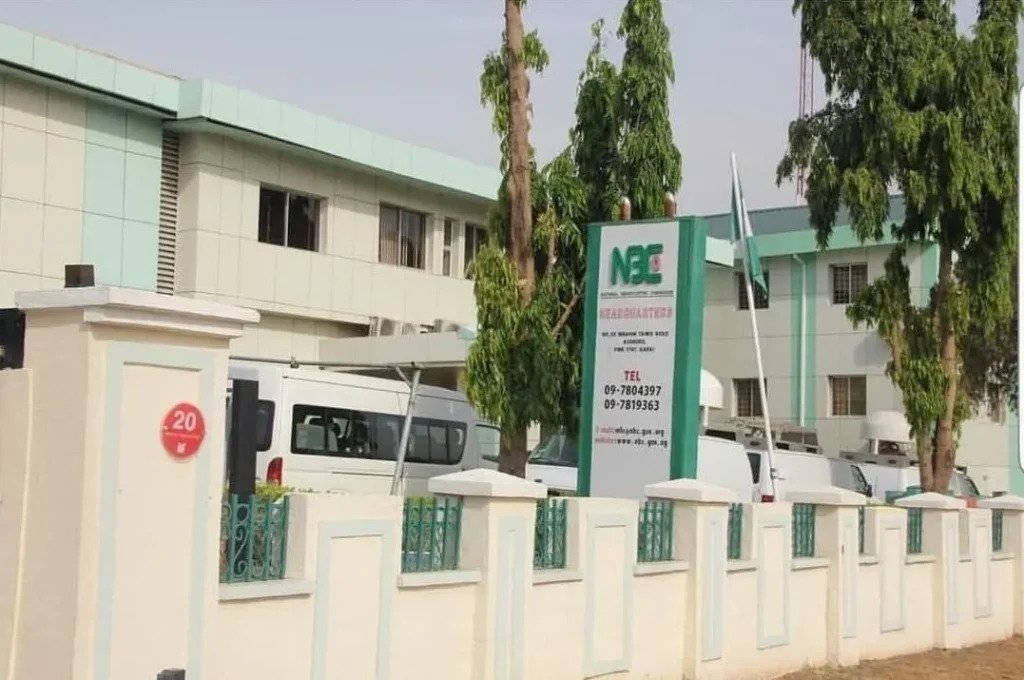
NBC says analogue broadcasting will end nationwide as government accelerates digital migration.
The Federal Government has fixed December 2028 as the deadline for Nigeria’s final transition from analogue to digital television broadcasting.
The Director-General of the National Broadcasting Commission (NBC), Charles Ebuebu, disclosed this in an interview with the News Agency of Nigeria (NAN) in Abuja.

Ebuebu said the December 2028 target marks the country’s final analogue switch-off, adding that the digital migration would be implemented in phases.
“We put a timeline for analogue switch-off. Before that time, a lot of things will be put in place. This is just phase one,” he said.
According to him, subsequent phases will cover pay television services, studio development and designated production centres for content creators.
The NBC boss also revealed that audience measurement is progressing, with a proof-of-concept completed in about 7,000 households in Lagos, while implementation has commenced in Abuja.
He said the commission would unveil details of the remaining phases after consultations with key stakeholders, including the Broadcasting Organisation of Nigeria (BON), to secure industry support.
Ebuebu explained that the analogue switch-off would free up valuable broadcast spectrum for other strategic uses, including telecommunications, digital applications and financial services.
“I won’t put a sum to it, but it is valued upwards of about 50 billion dollars. Consultants will determine its actual value before allocation,” he said.
On obsolete broadcasting equipment, the NBC Director-General said the commission is developing a policy based on expert recommendations and international best practices.
He noted that the Digital Switch Over White Paper requires broadcasters to separate content production from transmission, with signal distribution to be handled by licensed operators such as NIGCOMSAT.
Ebuebu added that while some analogue equipment may be repurposed, the Federal Government would be approached to absorb unusable assets to prevent environmental hazards associated with industrial waste.