Lawmakers extend investigation by three weeks to scrutinise funding, accountability and student welfare programmes across key government agencies.
The Senate has extended by three weeks the lifespan of its ad hoc committee investigating the Safe Schools Initiative and expanded the probe to include the Tertiary Education Trust Fund (TETFund), the Nigerian Education Loan Fund (NELFUND), the Universal Basic Education Commission (UBEC), the Federal Ministry of Humanitarian Affairs and Poverty Alleviation, and the National Social Investment Programme Agency (NSIPA).
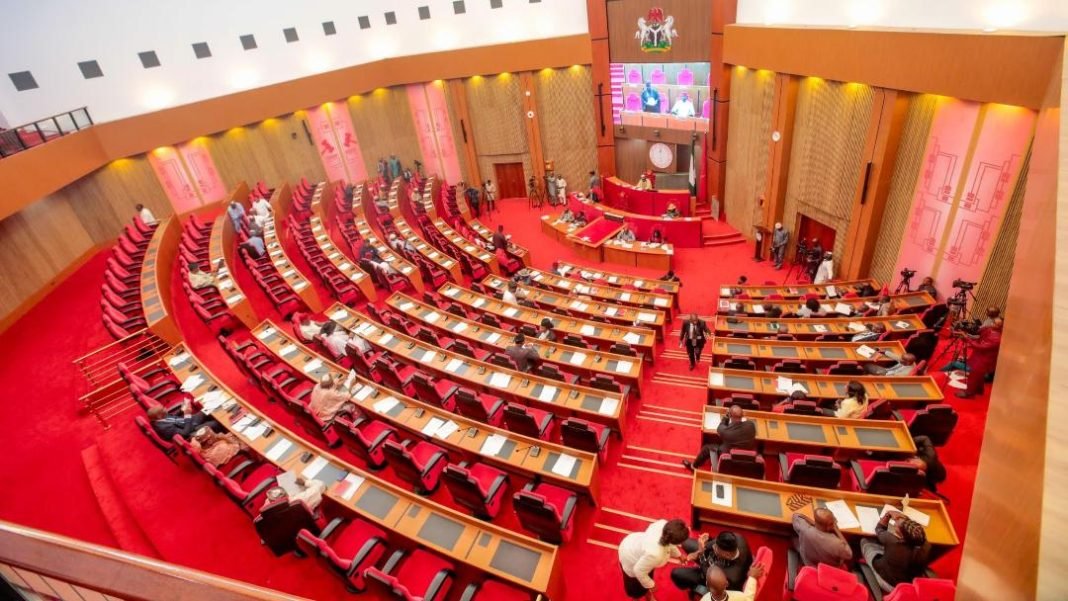
The decision, taken during Tuesday’s plenary, is aimed at conducting a comprehensive investigation into the funding, implementation and accountability of education and social intervention programmes linked to the safety and welfare of students across Nigeria.

The resolution followed a motion sponsored by the Chairman of the Senate Ad hoc Committee on the Safe Schools Initiative, Senator Orji Uzor Kalu (APC, Abia North), who said preliminary findings revealed strong links between the initiative and agencies responsible for educational funding, humanitarian interventions and student welfare.
Kalu explained that limiting the probe to the Safe Schools Initiative would result in fragmented legislative oversight, given the interconnected nature of school security, educational infrastructure and social intervention programmes.
“The issues surrounding student security, educational infrastructure funding and social intervention schemes for vulnerable learners are deeply interwoven. Investigating the Safe Schools Initiative alone will not provide a complete picture,” he said.
Under its expanded mandate, the committee will examine financial flows, operational challenges and accountability mechanisms across the affected agencies. It will also assess TETFund’s infrastructure and security-related projects, NELFUND’s student loan disbursement processes, UBEC’s basic education interventions, and social safety net programmes for vulnerable students.
The committee is expected to review school feeding programmes, emergency relief initiatives for displaced learners and educational rehabilitation projects implemented through the Ministry of Humanitarian Affairs and NSIPA.
Kalu informed lawmakers that additional time was required to conclude critical aspects of the investigation, citing the extensive scope of the assignment and other legislative responsibilities.
Following a voice vote by Senate President Godswill Akpabio, the Senate unanimously approved the three-week extension.
The Safe Schools Initiative was launched in May 2014 following the abduction of 276 schoolgirls from Chibok, Borno State, as a partnership involving the Federal Government, the United Nations and private sector stakeholders to improve school security across conflict-affected communities.
The Senate commenced its investigation in December 2025 amid growing concerns over persistent attacks on schools despite years of government funding and interventions.
The probe gained renewed urgency after the abduction of 25 female students of Government Girls Comprehensive Secondary School, Maga, Kebbi State, where bandits reportedly killed the school’s vice principal.
Previous hearings by the committee scrutinised the disbursement of ₦15 billion released for the programme in 2023, with the Nigerian Police Force receiving the highest allocation of ₦6.225 billion, while other security and education agencies also received significant funding.
With its expanded mandate, the committee is expected to present a comprehensive report on the utilisation of education, security and humanitarian intervention funds and recommend measures to strengthen transparency, accountability and student safety across the country.