
Nigeria says 98 citizens have died in hate-related attacks since 2022 as it urges Pretoria to end recurring violence against African migrants.
The Federal Government has called on South African authorities to take urgent and concrete measures to end the recurring xenophobic attacks on Nigerians and other African nationals, warning that the violence threatens decades of diplomatic and economic ties between both countries.
Minister of State for Foreign Affairs, Ambassador Sola Enikanolaiye, made the call on Monday during a meeting in Abuja with South Africa’s Minister of International Relations and Cooperation, Ronald Lamola, who is in Nigeria as a special envoy of President Cyril Ramaphosa.

Enikanolaiye said Nigeria is deeply concerned about the recurring attacks, noting that incidents of xenophobic violence have been recorded in 1995, 1998, 2006, 2015, 2016, 2019, 2021, 2024 and 2026.
“It is on record that from 2022 alone, 98 Nigerians have died in mob actions and hate-related attacks that we have called Afrophobia because the primary victims are Africans, and Nigerians in particular,” he said.
While appreciating South Africa’s assurances of maintaining cordial relations, the minister stressed that Nigeria expects decisive action rather than diplomatic sentiments.
“We desire to maintain excellent relations and take urgent, concrete measures not just to build confidence but to address these ongoing Afrophobic attacks. Enough has got to stop,” he said.
Enikanolaiye maintained that while Nigeria does not condone criminality, accused persons must be treated in accordance with the rule of law.
“If there are criminals, the solution is not to kill them. Get them arrested, prosecuted and jailed. The Nigerian government will not support drug peddlers, but they must be treated in accordance with the constitution, international human rights instruments and the minimum requirements of humanity,” he stated.
He lamented that many Nigerians legally residing in South Africa had become victims of mob violence, alleging that security agencies sometimes failed to intervene during attacks.
The minister disclosed that approximately 1,500 Nigerians have been evacuated from South Africa following the recent wave of violence, describing the experience as heartbreaking.
“I shed tears on the plane when I saw children, women and the elderly returning home almost with nothing. Some of their properties have been looted and destroyed. I don’t think that is the way we want to conduct relations in Africa,” he said.
Enikanolaiye also recalled Nigeria’s support for South Africa during the anti-apartheid struggle and both countries’ collaboration in advancing continental initiatives, including the African Union and the New Partnership for Africa’s Development (NEPAD).
Responding, Lamola said President Ramaphosa and the South African government remain opposed to xenophobia and all forms of intolerance.
“President Ramaphosa and the government he leads have been outspoken against any intolerance,” he said.
He, however, defended South Africa’s sovereign right to enforce its immigration laws and tackle criminal activities.
“We have the right to deal decisively with irregular migration and undocumented immigrants, including acts of criminality,” Lamola added.
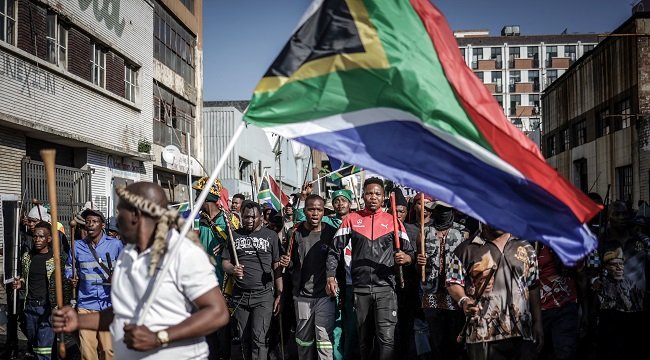
South Africa has witnessed months of anti-immigrant protests, some of which have turned violent, with demonstrators blaming migrants for unemployment, rising crime and pressure on social services.
Although South African police have confirmed the deaths of at least four foreign nationals in the attacks, several African governments repatriating their citizens have reported higher casualty figures.
Nigeria and Ghana remain among the African countries that have openly criticised South Africa’s handling of the crisis, calling for stronger measures to protect foreign nationals residing in the country.