
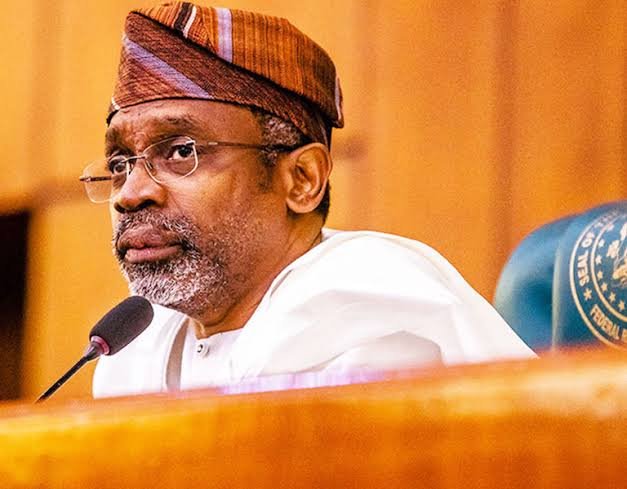
The Chairman of the Presidential Working Group on the National Policing Bill, Femi Gbajabiamila, has warned against granting state governors unfettered operational control over state police when the proposed system takes effect.
Gbajabiamila, who is also Chief of Staff to President Bola Tinubu, said the policing reform must address not only who would police communities but also the question of “who polices the police.”

He made the remarks on Monday during the second plenary session of the Nigerian Bar Association’s 66th Annual General Conference in Port Harcourt, Rivers State, themed “Policing in Transition.”
According to him, governors should be allowed to set broad security priorities and seek legislative approval for resources but should not have personal authority to order the arrest of political opponents, halt investigations, disperse lawful gatherings or dictate police conduct during elections.
“The law must draw that line through institutions, not through promises,” he said.
Gbajabiamila explained that the proposed dual policing structure, comprising a Federal Police Service and State Police Services, was designed to address the limitations of Nigeria’s highly centralised policing system.
He called for legal protections for police officers who refuse to carry out unlawful orders, as well as independent mechanisms for investigating serious misconduct by senior officers.
He also warned that appointments and dismissals must not be used as tools for rewarding political loyalty.
According to him, the proposed system must prevent officers dismissed from one police service for brutality, extortion or criminal conduct from simply resurfacing in another jurisdiction.
Gbajabiamila described the proposed reform as one of the most significant changes to Nigeria’s constitutional and security framework since the return to democratic rule in 1999.
He stressed that the reform would go beyond simply creating 36 additional police departments, requiring a fundamental redesign of how lawful force is organised, controlled and held accountable across the country.
The Chief of Staff said the constitutional amendment required to permit state police was already in progress, noting that both chambers of the National Assembly had approved proposed amendments allowing the establishment of Federal and State Police Services.
He, however, explained that the amendment must still pass through additional constitutional procedures before state police can become a reality.
“The National Assembly must complete any remaining harmonisation and transmit a common text to the State Houses of Assembly. At least 24 of the 36 State Houses must approve the amendment before it can proceed for presidential assent.
“Until those steps are completed, state police remains a proposal,” he said.
Gbajabiamila added that the Presidential Working Group was preparing the National Policing Bill alongside the constitutional amendment process to ensure that the government would be ready to begin implementation if the amendment succeeds.
He emphasised that the bill alone could not establish state police, as the Constitution must first be amended to provide for it.
Rather, he said, the proposed legislation would establish a common framework covering professional standards, state readiness, inspection, complaints, information sharing, firearms control, funding and the transition to the new policing structure.