
The Federal Government has dismissed reports claiming it spent more than ₦8 trillion outside the 2026 budget, describing the allegations as inaccurate and a misrepresentation of the International Monetary Fund’s (IMF) 2026 Article IV Consultation Report.
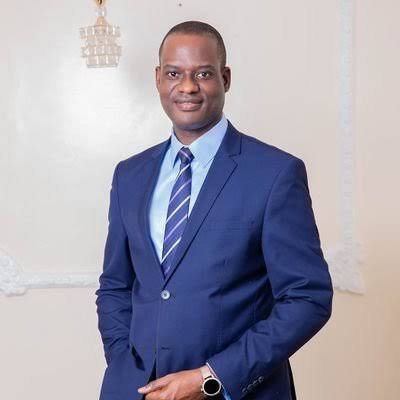
In a statement issued on Sunday, the Minister of Finance and Coordinating Minister of the Economy, Taiwo Oyedele, said the Federal Government does not operate a “shadow budget” or spend public funds outside the constitutional and legal framework.
The clarification follows comments by the IMF’s Resident Representative in Nigeria, Christian Ebeke, who said public spending equivalent to about two per cent of Nigeria’s Gross Domestic Product (GDP) was not reflected in recent official budgets, creating a statistical discrepancy in the country’s fiscal reporting.
The IMF’s remarks prompted criticism from opposition leaders, including former Vice President Atiku Abubakar and Labour Party presidential candidate Peter Obi, who called for an investigation into the alleged unreported expenditure.
However, Oyedele said the claims wrongly portrayed the IMF’s observations as evidence of illegal government spending.
According to him, Sections 80 to 83 and 162 of the 1999 Constitution require all public spending to be carried out through Appropriation Acts, Supplementary Appropriation Acts, or other statutory approvals granted by the National Assembly.
He explained that multi-year capital projects, approved capital rollovers, statutory transfers, debt servicing, security interventions, disaster response programmes, and other legally authorised expenditures are recognised components of Nigeria’s public finance system and should not be interpreted as spending outside the budget.
“It is inaccurate to suggest that trillions of naira have been secretly spent without legislative approval,” Oyedele said, adding that such allegations should be backed by credible evidence identifying projects allegedly executed without legal authorisation.
The minister also stressed that the reported amount does not automatically translate into a higher fiscal deficit, noting that the deficit is determined by the relationship between total government revenue and total expenditure, regardless of the lawful financing mechanism used.
He maintained that the IMF’s recommendations focused on improving the completeness and presentation of Nigeria’s fiscal reporting rather than questioning the legality of government expenditure.
Oyedele further noted that President Bola Tinubu had already proposed a unified budget framework to eliminate overlapping budgets during the presentation of the 2026 Appropriation Bill in December 2025.
He reaffirmed the Federal Government’s commitment to fiscal discipline, transparency and accountability, while urging Nigerians to rely on verified facts and avoid misinterpreting technical fiscal observations.